Showing posts with label justice. Show all posts

Monday, November 4, 2019

The persistent widow and the unjust judge.

Image result for persistent widowIt is, as if, Jesus had called Central Casting and requested two stock characters for his little documentary.  First he needed the most vulnerable, historically ignored and abused individual they could imagine.  Enter: the persistent widow.  Second, he needed the most privileged and arrogant male in a position of power: the unjust judge. He uses these two characters to remind us that our journey along 'the Way' (following Jesus) would take us through some serious spiritual swamps.  What is required of us on this mucky muddy road?

Micah tells us that three things are required, 'Do justice. Love mercy, and walk humbly with your God.'  The parable about the unjust judge leads us to consider the command to 'do justice.'
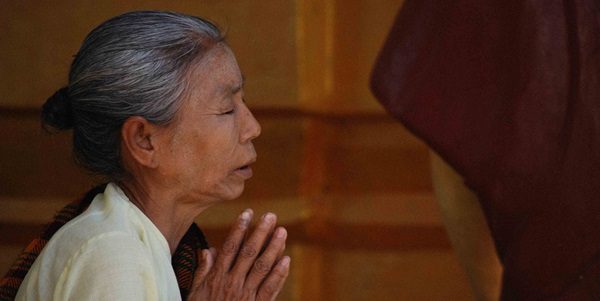

woman in prayerFor many, justice equates with an episode from Law and Order.  However, the biblical concept of justice is much larger than a criminal court system.  In God's schema, justice involves the whole of the universe.  Justice reigns when the system is balanced; equal access to all; equal voice.  Since we all know the world isn't balanced, then God calls those who have more to right the scales by caring for those who have been short changed.  In our parable, the widow is powerless, and easily dismissed - as the judge has done many times.

This arrogant judge, who admits he dismisses both fellow humans and God, sits in a position of privilege.  He might even have worked hard for it, but he uses that privilege solely to serve his own desires and purposes.  You can picture him down at the country club bar with some cronies laughing at this hapless woman who Won't.Go.Away!  It doesn't matter how just her cause or the depth of her need.  He just wants her gone.

Systemic injustice was not just a problem in 1st century Palestine.  Let me cite some examples from today.  A school system has announced that children who owe lunch money will not be given food; they will be turned away at the lunch line.  Or this: The pressure of competition from the big box stores keeps the price of a gallon of milk artificially low in NY, at least $10 per hundred weight under the cost of producing the milk at the farm.  Smaller farms will be forced out of business.  Or this: The incarceration rate of persons of color twice exceeds their percentage in the population; they are given longer sentences for similar crimes, and even at the cash bail level, are forced to pay larger amounts.

Let's hear this parable as a reminder that injustice is alive and well and right down the street.  We move through ethical swamps daily and interact with systems that privilege some and shortchange others.  Somewhere in your life, you have or will run up against a system that is, in its design, unbalanced.  Often we sit in the position of privilege.  We have options and advantages that are not given to others.  Justice is skewed.

Our call to discipleship includes actively seeking justice - not just for ourselves, but for our neighbor as well.  Of the many things that we could do, being the one who stands with the widow her next time in court is but one.  Skimming through life pretending that it all evens out in the end is to ignore our call as disciples.

I rarely know how to address the injustice I see or know exists, but I am certain that turning a blind eye and deaf ear to the cries of the widow is not the option Jesus calls me to.

Monday, April 21, 2014

Easter eggs?


They are fun.  They are pretty.  They are even nutritious, but they have nothing to do with Easter.  Just so we are clear about that.

Because if a hard boiled egg is all we have to fight sin, death and the devil, then we are in real trouble.  If egg salad is the best we can do when we have grievously wronged another person, then what do we do?  When you are working for justice in the world, just where do brightly colored eggs come in?

He is risen!  Death does not have the last word.  That's the victory we claim.

Thursday, March 13, 2014

Mercy and grace.....grace and mercy


Jesus announces the inauguration of the Kingdom of God, a Kingdom of Mercy and Grace.  
What does this means?  Let me get you started:

Mercy:  you do not get what you rightly deserve

Grace:  you get what you would never in your wildest dreams deserve

Certainly there are justice and judgment as well.  Without justice there could be no mercy.  With justice there would be less need for mercy.

Likewise judgment.  Judgment is the mirror into which Grace looks.  Without judgment, who would ever figure out that what they were receiving was grace?

Mercy and Grace are just two words to help define Jesus who was Love Poured Out for the sake of the world.  That's the Kingdom of God at its core.  Still interested?

Tuesday, December 10, 2013

Disturbing the peace

"Do not disturb."  Hotels give you this convenient little door hanger to alert the staff that you want no interruptions.  Wouldn't it be nice if we had just such a discreet way of signaling the world - or our family - or the person sitting at the next desk - that we would prefer to be left alone?

Please don't interrupt the flow of my work.  Please don't waste my time with pictures of your grandchild.  Please don't bring around holiday goodies that I can ill afford to eat.  Please don't come with your fresh cup of coffee to talk football, politics, shopping horror stories or to complain about your boss, wife, mother-in-law, neighbor.  Please don't.....just go away.

We want a little peace.

Or do we?  Is it possible that what we want is for folks to stop questioning our lifestyle, habits, intentions or actions?  Could it be that we are happy, happy, happy with our life and really don't want to know about anyone else's?  Might it be that we are not seeking some level of calm, but rather insulating ourselves from everything that makes us uncomfortable?

Real peace can only be built on truth and justice and so requires a great deal of disturbing - disturbing complacency and smug contentment, disturbing greed and hoarding, disturbing power structures and systems.  The prophets knew this; Jesus died to change this.  Peace is not a lack of conflict; rather it is conflict reconciled.

This Advent take up the work of disturbing the peace for the sake of your neighbor.  It's your calling.  It's the only path to true peace.

Monday, November 11, 2013

#4 The unchurched are............"

Boy do I hate that term "unchurched."  At least my Lutheran brothers and sisters are less prone to use the other terms "unbelievers" or "backsliders" in this attempt to quantify faith.  When we use a word like 'unchurched' we imply that there is a cosmic obligation to speak about the faith the way that those inside the church do.   We announce that the church is the litmus test of the presence of faith.

Jesus never, never, never, never called his disciples to 'church' the people.  Jesus did not come to 'church' the world.  Jesus was not interested in whether you had taken membership classes. He works with disciples of 'little faith' throughout the entire gospel of Matthew.

Jesus wanted to know if you could see the injustice that this world sanctifies and wanted to do something about it.  Jesus wanted to know if you could recognize a blessing when it fell into your hands, and then make use of it for the sake of others.  Jesus wanted to know if your heart was filled with compassion or critique, because that is the kind of kingdom Jesus was establishing: a place of justice, mercy, compassion and blessing.

These are not strictly Christian or church concepts.  But these are the concepts at the center of Jesus' desire for this creation.  Certainly Jesus spoke of judgment, yet in these terms:  when God's kingdom is all in all, those who have chosen injustice over justice will find themselves outside the gate.  It was their choice from the beginning and they have condemned themselves.

We are not called to seek the unchurched....or label them or call them names.  We are to do justice, love kindness and walk humbly with our God. (Micah 6.8)  When we are busy doing that, we can talk with others who are on the same journey about the God who has shown us the way and called us to action.

We can invite them to know this God whom we know.  Sort of how Jesus did it.

Thursday, October 3, 2013

Where is God? Part 1


Boy does that question get asked a lot. The question generally implies that God is gone, on vacation, not here, never existed, not doing the God job properly.  Wrestling with this dilemma will help us talk about our faith life and God's presence in it.

The 'absence' of God argument, at first glance, has two variations.  First: God is not here (wherever here is).  Second: the God we expect is not here. We have some very clear expectations about God.  Most of them have to do with righting wrongs and keeping people safe and eliminating tragedy from life.

Let's start with #2.  Regardless of our religious upbringing or active faith life, everyone has opinions about what God should do.  We carry around some kind of job description, a mental list of qualities that any God should have, like justice and mercy.   Justice and mercy are generally high on the list although I am suspicious that they are mostly high on our list.  That is, God owes us justice and mercy.  When tragedy strikes; when we get the wrong end of the stick....well, even when evil crashes into our lives, we cry out to God and demand justice.  Our disappointment in God is obvious.  We are less disappointed when God fails to bring about justice or mercy for others, especially those we don't know....the great unwashed masses.

Which leads us back to #1:  God is not here.  In fact, what we are saying is "I don't experience what I conceive of as God here, now."  Not 'experiencing God', if you'll pardon the pun, may be due to our lack of experience and certainly  is a world apart from "God is not here."  Often our expectations of how God acts eliminates our ability to see or hear God.  We are looking for only one possible response from God and it has to look or sound like 'this.'  When that doesn't happen, we conclude that God is absent.

People of faith approach this dilemma from the other end of the tunnel.  We expect God to be present and when we cannot see or hear God, we expect the problem is with us, not God.  Carl Jung had this Latin phrase engraved on his tombstone  Vocatus atque non vacatus, Deus aderit.  It continues to be both reassurance and reminder:  Bidden or not, God is present.


Tuesday, September 24, 2013

The Grand Canyon of Life

In this week's parable Jesus talks about 'a great chasm.'  One of my colleagues pictured it as the Grand Canyon.  The people on one side can't get to the other.  Really quite a poetic image, but the reality of living on the wrong side of a great chasm I couldn't cross is much less so.

Jesus builds up this image of the chasm between a rich man and Lazarus.  The rich man is clothed in purple (very expensive!) cloth and fine linen .....and Lazarus is clothed in 'sores that the dogs lick.'  The rich man lives in a mansion with a gate to keep out the unwanted ones; Lazarus lives outside the gate. He is one of the unwanted ones.  The rich man has sumptuous feasts every day; Lazarus would have been satisfied with the crumbs from the rich man's table.  Luke 16

Now that's a chasm.  This rich man is very, very, very rich and Lazarus is equally poor.  Jesus doesn't want to leave any doubts in the hearer's minds.  He describes a chasm of wealth which leads to a chasm between God and the rich man.

What do we do with this old story?  First, we don't try to convince ourselves that the same conditions are unheard of today.  Great chasms exist today and wealth is often the underlying source.  Second, we are to see how the rich man's blindness to his neighbor (because, in fact, Lazarus lived right outside his gate) built a great chasm between him and God.  The rich guy saw Lazarus only as someone put there to serve his needs....not as another human being with needs (overwhelming needs!) of his own.

Most importantly, the rich man was blind to God's purpose for this world from the beginning, but especially in the life and ministry of Jesus.  Jesus came to mend this world - to heal it - to make it whole - to bring it again into perfect relationship with God the Creator.  Anything which keeps us from being a part of this great healing of the world also keeps us from God.

N.T. Wright, a biblical scholar has written "What you do in the present- by painting, preaching, singing, sewing praying, teaching, building hospitals, diggings wells, campaigning for justice, writing poems, caring for the needy, loving your neighbor as yourself - will last into God's future."  Or as one blogger writes, 'Whatever we do to mend the world has lasting value.  Everyone contributes.  God blesses each and every gift.'

Great wealth can lead to great blindness and a mistaken trust in the protection that wealth provides.  But it is not only wealth that can pull us away from contributing to God's vision of a redeemed world.....it is just that most of the time it does.  Money too often makes us blind.

The rich man had so much with which he could have balanced the scales of justice for Lazarus, and possibly for many others as well.  He wouldn't have reversed the spin of the earth but he would have contributed the blessings he had received to God's holy plan through his care for one neighbor.  One neighbor.  One.


Monday, September 23, 2013

Expendable, invisible, outside the gate

Wow!  I wouldn't want to be that person.

Luke 16 tells a parable about an impoverished man named Lazarus (the Lazarus who was raised from the dead is in the gospel of John) who sits outside the gate of a great mansion.  Every day rich and influential people are invited through the gate for a great feast.  Every day Lazarus sits outside, clothed in sores and hungering for the leftover crumbs from the feast.  Crumbs never come his way, even though the rich man knows him enough to know his name and recognize his face. Lazarus was, in fact, the rich man's neighbor.

We as a society have a thousand ways of making that person know just how unwanted they are.  We pass them by without a glance or nod....or in the case of Lazarus, a crumb of bread.  We never bother to learn their names; they are never really people to us.  They are urban furniture; landscape anomalies; obstacles to avoid.  Even though they sit right outside our door day after day.

What would it take for us to see them as lost sheep?  As beloved children of God?  As the very persons we are sent to give care to?  What would it take for us to conceive of our wealth as a tool in our hands to ease the suffering of at least this one person?  We cannot fix it all - but do we get a free pass on fixing any of it?

What does the good news of Jesus look like when you encounter one of the expendables?  When you are one of the expendables?  How loudly would you cry for justice then?

Wednesday, August 7, 2013

Bow your head, close your eyes....and shut out the world?

It is how we pray.

But I wonder if it is also a way to shut out the world; to create our own world in our own mind.  I wonder if we bow our heads and close our eyes in order to blot out the reality of the world we live in.

If so, we are not following Jesus - the one who stepped into the muddy water of the Jordan River and then walked out into his world to heal the sick, include the outcast, love the unlovable, free those who were held captive and seek justice for others.

Not just food and shelter and clothes and justice and freedom and a living wage for his own family.  No, Jesus counted every other person as family - and then he worked for the weakest of them.  We are called to do the same.

Wednesday, December 12, 2012

"My soul magnifies the Lord"


The Magnificat

"My soul magnifies the Lord, and
        my spirit rejoices in God my Savior."

That is what these words of Mary are called (it has to do with how it is rendered in Latin).  This is  wonderful poetry for which much beautiful music has been written.  Evening Prayer includes them in the liturgy.

They are also a call to justice.  Mary is not solely concerned with this miraculous pregnancy simply for her own sake.  Oh no, Mary is announcing the long awaited coming of God's justice: where the proud are scattered; the powerful are brought down, the hungry are filled with good things and the rich are sent away empty. (Luke 1.46-56)

If you have any experience with justice in the real world, you know it is never an easy road.  When you are toppling the powerful and lifting up the lowly there is going to be a lot of push back, a few deaths and a great deal of suffering.  Yet, this is Mary's song and Mary's hope: that God's justice will prevail in this world and in her time.

If you just thought she was a pretty little thing on the Christmas cards, well, I guess you'll just have to re-think that one.

Tuesday, November 27, 2012

A vote for justice

I have not seen Spielberg's movie Lincoln yet, but it is on my holiday schedule.  From the moment years ago when I read Lincoln's second inaugural address, I have been taken with Lincoln's humble understanding of what it means to 'stand before God.'  At a critical moment in our history as a nation founded on democratic principles, Lincoln pressed forward with what he thought was right and just and issued the Emancipation Proclamation. 

Yet he never discounted the political realities of his day.  I quote from Michael Gerson's column of 11/27.  It was necessary for Lincoln to "divide moral sympathies from ...pragmatic judgments."  This was Lincoln's burden, for "while justice is not defined by the majority, it can't be pursued without support from the majority." 

Lincoln is a towering figure in our history and a study of a man who felt called by God to stand in the breech when chaos reigned around him.  It is helpful, however, to remember that the constitutional changes which finally acknowledged what God had known all along, that no person can rightfully be owned by another, took the combined effort of many totally forgotten men who sat in Congress. The "dramatic culmination of the movie is a roll call - a list of forgotten legislators whose hesitant, conflicted choices were as important as the outcome of the battle."  It was these little known and even less remembered individuals who changed the course of our history.

So, my friends, it is good for us to remember that the little things we do for the sake of justice may never bring us fame, but when counted with the other anonymous acts of justice can move nations. 

Monday, November 5, 2012

We're talkin' about widows

Throughout the Old Testament we hear again and again God's command to Israel to care for the widows and orphans.  That is because, in the structure of their society, no one else did.  Widows and orphans represented the most vulnerable, those with no power at all, no voice, no resources.

Who would we put in this category today?  In light of Hurricane Sandy we might put those who are now homeless.  Perhaps all homeless folks should be in this category.

In light of Newtown, we might put grieving parents into this category, or perhaps all those who are left behind when violence claims a loved one.

Justice - according to our faith - is the balancing of the scales; that is, lifting up and protecting those who are vulnerable and without a voice. 

Who needs our protection today?  What are we/you doing to care for them?

Thursday, October 11, 2012

"Seek good and not evil, that you may live"

This is Amos' advice to the people of the Northern Kingdom (sometimes referred to in the prophets as the house of Joseph, sometimes referred to as Israel).

This is what it has come down to:  seek good and not evil, so you may live.  Because there will be nothing else left after God's judgment prevails.  Amos 5.6-7, 10-15

Amos is one of only two prophets whose primary focus is economic justice.  He speaks of the economic oppression of the poor by their own people.  He speaks of the lack of justice at the city gate, both for those with disputes but also for the needy who sought help.   (Note:  a judge or wise elder would sit at the city gate and any party who had a dispute would take their case to the judge and he would make a ruling.  Amos claims the judges were bribed to rule in favor of the wealthy.)

In other words, the system was rigged.  That is what 'justice' is about in the Bible; establishing an even playing field for all where political or economic power is a tool to be used for the betterment of those in need and to advance the common good.  Not every one ends up 'rich' in a just system; but everyone has equal access and is the concern of every other citizen.

You may have noticed that we are in the heat of the political system.  We have heard claims, counter claims, truths, half truths and outright lies.  The thoughtful among us know that no matter what the candidate says, s/he must contend with the system once in office, and the unforeseen events that shift our choices.

And yet we must decide.  We need to listen closely.  Who will benefit from the position this politician is taking?  Who will lose out?  Am I concerned only with what will happen to me or have I considered the common good?  Are they telling some version of the truth about what is possible to achieve? 

This applies to both domestic and foreign policy.  Most of this is way beyond my pay grade; I don't really understand the intricacies of economic policy nor the complex situations that exist in Libya or the Middle East.  I work to think through, to listen closely to whether what is proposed will, in any way, increase the common good.  Is it just?  To all?

This text from Amos comes at a good time for us.  To quote Jesus, "Let those who have ears, listen."

Saturday, August 18, 2012

What is justice?

Justice is a word that is used differently inside and outside the Christian church.  For the person on the street, justice is about the (right) punishment of criminals.  For believers, justice is much more about leveling the playing field, opening up possibilities and opportunities for a more equitable distribution of resources. 

Paying your workers so little that they cannot eat properly so to maximize your profits and maintain your profits is an unjust system, and for believers, cries out for greater equity.  Justice will not eliminate the gap between rich and poor, but it will stand with the oppressed and ask for change.

Yesterday 35 miners were shot by police in South Africa.  This disagreement has been boiling up for some time and it has much to do with wages, but also deals with unions trying to expand their membership (often at the expense of the miners themselves).

The mean income in South Africa is $11,000.  Miners are paid between $3500 and $6000 annually(according to CNN news).  They live in shacks (there is simply no other word to describe them) with educational opportunities for their children few and far between.  They want more; they want some kind of equity. They want a wage that reflects the dangers of the work they do and offers some kind of opportunity for their children.

Yesterday it all fell apart.  Video shows a nervous and poorly commanded police force using automatic weapons encountering a crowd of miners who were armed with machetes and possibly hand guns.  An open area divided them.  Then shots rang out and 35 were dead.

Are we humans so greedy that this outcome is acceptable to anyone?

Let justice roll down like water ........AMEN