Showing posts with label discipleship. Show all posts

Monday, November 4, 2019

The persistent widow and the unjust judge.

Image result for persistent widowIt is, as if, Jesus had called Central Casting and requested two stock characters for his little documentary.  First he needed the most vulnerable, historically ignored and abused individual they could imagine.  Enter: the persistent widow.  Second, he needed the most privileged and arrogant male in a position of power: the unjust judge. He uses these two characters to remind us that our journey along 'the Way' (following Jesus) would take us through some serious spiritual swamps.  What is required of us on this mucky muddy road?

Micah tells us that three things are required, 'Do justice. Love mercy, and walk humbly with your God.'  The parable about the unjust judge leads us to consider the command to 'do justice.'
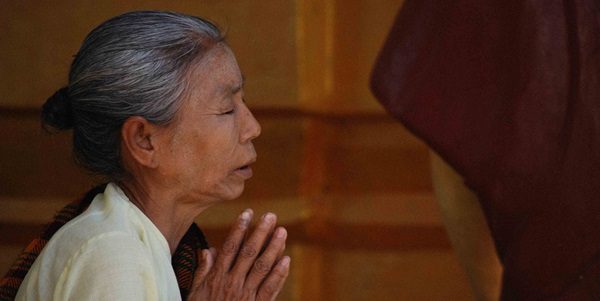

woman in prayerFor many, justice equates with an episode from Law and Order.  However, the biblical concept of justice is much larger than a criminal court system.  In God's schema, justice involves the whole of the universe.  Justice reigns when the system is balanced; equal access to all; equal voice.  Since we all know the world isn't balanced, then God calls those who have more to right the scales by caring for those who have been short changed.  In our parable, the widow is powerless, and easily dismissed - as the judge has done many times.

This arrogant judge, who admits he dismisses both fellow humans and God, sits in a position of privilege.  He might even have worked hard for it, but he uses that privilege solely to serve his own desires and purposes.  You can picture him down at the country club bar with some cronies laughing at this hapless woman who Won't.Go.Away!  It doesn't matter how just her cause or the depth of her need.  He just wants her gone.

Systemic injustice was not just a problem in 1st century Palestine.  Let me cite some examples from today.  A school system has announced that children who owe lunch money will not be given food; they will be turned away at the lunch line.  Or this: The pressure of competition from the big box stores keeps the price of a gallon of milk artificially low in NY, at least $10 per hundred weight under the cost of producing the milk at the farm.  Smaller farms will be forced out of business.  Or this: The incarceration rate of persons of color twice exceeds their percentage in the population; they are given longer sentences for similar crimes, and even at the cash bail level, are forced to pay larger amounts.

Let's hear this parable as a reminder that injustice is alive and well and right down the street.  We move through ethical swamps daily and interact with systems that privilege some and shortchange others.  Somewhere in your life, you have or will run up against a system that is, in its design, unbalanced.  Often we sit in the position of privilege.  We have options and advantages that are not given to others.  Justice is skewed.

Our call to discipleship includes actively seeking justice - not just for ourselves, but for our neighbor as well.  Of the many things that we could do, being the one who stands with the widow her next time in court is but one.  Skimming through life pretending that it all evens out in the end is to ignore our call as disciples.

I rarely know how to address the injustice I see or know exists, but I am certain that turning a blind eye and deaf ear to the cries of the widow is not the option Jesus calls me to.

Monday, September 9, 2019

Wrestling with the cross.....again

"Whoever does not carry the cross and follow me cannot be my disciple."  Luke 14.27

Image result for crucifixion of jesusMention a cross and Christians think Good Friday with its unbearable image of a suffering, dying Jesus nailed to a cross, arms outstretched, chest bared to the world, stripped of everything.  But it is not his naked form which causes us to avert our eyes, but his powerless vulnerability and the wrenching violence of the scene.  For people of faith, the Good Friday cross is deep mystery, other worldly power, and - somehow - a promise.  When Jesus speaks of us carrying the cross, it is also frightening.

Our fear is not grounded in our death; our fear is grounded in the possibility that this cross is calling us to a particular manner of living.  We fear that we are called to live with arms outstretched, vulnerable, and powerless: stripped of the masks behind which we hide, the defenses we have built to protect ourselves,  and all of our resources including bank accounts and storage units.  Our fear is that faith in the Jesus who was crucified in some manner demands that we, like him, are emptied of power and solely dependent on the Creator God.  I think it does.

"Whoever does not carry the cross and follow me cannot be my disciple."

Yet, it will not be soldiers who nail us to our modern cross of faith but love: that deep love of God which we have come to know through Jesus.  It will be the love that has transformed us by crushing our hearts of stone and giving us hearts of flesh.  It will be the love of Jesus which has opened our eyes to our neighbors - no longer categories and labels and judgments - but wounded and gifted children of the Creator God.  It will be the love that builds relationships based not on family connections but on forgiveness and reconciliation which will bind us to this path.

It is this love which draws us to follow Jesus and calls us to carry our imperfect version of this life giving love with us - wherever we go, whomever we meet, and whatever the consequences.  As it flowed from Jesus to us, it now flows from us into the world.  We cannot put it down because we have discovered that the life we live inside this love is our most valuable possession. 

If we look closely, this cross of life-giving love for every corner of creation is the same cross Jesus carried, loving the haughty and the low, healing the broken, inviting the outcast.  His cross is our cross.

Image result for crossroadsSo now I must confess that my fear is real; I am afraid to do it; I am afraid that I cannot.  I struggle to release old patterns of behavior, old prejudices, and all the privileges I enjoy.  Luther was right when he wrote, "I cannot by my own strength or understanding come to faith in our Lord Jesus".  I fear what I will lose, most especially I fear that in the end, I will lose my grasp of this precious gift of grace which is Jesus.

So Jesus sits down at the table and holds up a loaf of bread and says to us, 'Whenever you gather together with bread, remember!  Remember!'  Breaking it he reminds us 'This is my body, broken for you.  Every time you raise a cup together, remember!  This is my blood poured out - in love - for you.  Wherever you go, I am there.  Remember!' 

Fed and nourished, we walk the way of cross together, you and me and Jesus, out of love, and for the sake of the world. 

Monday, October 22, 2018

Business 201: read the small print

Image result for spiralWe were talking about the rich man in Mark 10.  Today has lots of information and even more questions to ponder.

Of course the story is more than the few verses to which I have referred.  This encounter with a rich man is set in Mark's larger story; in chapter 11 Jesus will enter Jerusalem for the last time.  This story is situated within a smaller section of Mark's story which begins with the healing of a blind man (the healing that took two tries) and the healing of Blind Bartimaeus.  One should definitely pay attention to that dynamic.  Is there a 'blindness' in the rich man that needs healing?

So, we are engaging a story which stands in the immediate run up to the climax of Jesus' story.  The rich man interrupts Jesus on a journey - and that journey is to Jerusalem and is near its end.  Since Jesus is aware that his time is short, and certainly Mark is aware that the story is about to take an important turn, this story takes on a new urgency and with that, new meaning.  Jesus has a limited amount of time left to teach his disciples - to prepare them for the cross ahead that they can't even imagine.  These encounters are like the final letters of a dying man; they are especially important.

If you continue reading you learn several things.  First, the rich man turns away grieving for he had many possessions.  Second, Jesus 'looking at him, loved him' (a note that is eliminated from every other telling of this story).  Third, Jesus remarks that it will be very difficult for the rich to enter the Kingdom of Heaven.  Fourth, the disciples are shocked that the rich won't have priority seating.

The rich man turns away from Jesus.  He is the only person in the entire gospel of Mark who, when invited to follow Jesus, turns away.  Here are two things to ponder.  The Greek word used for 'grieving' or 'sad' has overtones of betrayal.  The man felt betrayed; his expectations were pulled right out from under his feet.  Here's another.  The word 'repentance' or metanoia in Greek means to turn around (that is, turn 180 degrees).  A repentant person turns from the wrong way and turns towards the right way.  But not the rich man - he's got repentance all backwards.  At the end of the story, he is going the wrong way!

Jesus loved him.  In fact, even before the rich man turns away, Jesus 'looking at him, loved him'.  I find this one of many grace filled descriptions of Jesus.  No judgment.  Just love.

Jesus knows how difficult it will be for the wealthy to enter his new kingdom.  They are the winners in this world.  The power of this world works to their advantage; they are comfortable and have the means to mitigate any difficulties that arise.  It is hard to let go of it all and cling only to God, to cling only to the crucified and risen Christ.  Jesus knows.

The disciples don't.  Throughout Mark's gospel, the disciples are incapable of comprehending what Jesus is telling them.  They expect that the Kingdom of God will function much like the kingdom in which they currently live - only they will be the winners in the new rendition.  They cannot conceive of the power of servanthood; they dream of places of glory in Jesus' kingdom.  They truly believe that the rich ones of this world will have the inside track in the next - because that is how it always works.

Who are you in this story?  Do you find yourself clinging to stuff that doesn't connect you with the Divine?  Does your fear of want keep you from making other choices?  Where are your blind spots?

It is good to remember that this is an open ended story.  Who knows what happens a week or a year down the road?  Does the rich man live out his life turned the wrong way?  Do we find the power of servanthood incomprehensible just like the disciples?

That's enough for today; it's exhausting.  Take a moment and listen for the Spirit for this we know - that Jesus looking at him, loved him.....and you too.


Business 101: don't pay more than what it's worth

Image result for gems gold jewelryLet's consider the story of the rich man in Mark 10.

Even though we don't 'learn' it until the end of the story, everyone in the crowd around Jesus knew from their first glance that this guy was wealthy.  Definitely his clothes were better quality, perhaps an expensive color like blue or purple, and I would guess he lacked that ever pervasive odor of sheep dung that the lower classes had.

I would guess that no one was surprised when Jesus engaged this wealthy man kneeling at his feet. Granted, Jesus talked with everyone but we know that the wealthy are given a bit of leeway; they are listened to.  The crowd might have even taken an unconscious step backward when this little scenario gets underway.  Even in the 21st century, we regular folk tend to put 'the rich' into a distinct and generally elevated category.  Somehow they have managed to be 'winners' in this lifetime.

He has a question.  "What must I do to inherit eternal life?"

How you hear this question shapes your response.  If what you hear is arrogance and entitlement then you might interpret the question as a quest for one more privilege, one more way to ensure that the lofty position he has in this lifetime carries over into the next.

However, if what you hear is an earnest, sincere desire to get it right, to find out if he has done enough, if he has forgotten something.........then you might be able to conger up a little grace and think he sounds a bit like 16th century Martin Luther.

Furthermore, we have no idea what Jesus knew or what Jesus was thinking.  We have lots of guesses, and a few clues, but our guesses are generally more a reflection of what is going on inside of us than they are insights into what is going on inside of either Jesus or this rich man.

Jesus appears to play it straight:  get your life in order, which for a Jew meant living righteously before God.  Follow the commandments.  But here it gets interesting.  Notice which commandments Jesus quotes.

The first 3 are missing.  There is nothing about God.  Then he lists murder, adultery, stealing,  , honoring mother and father and defrauding??  There isn't a defrauding commandment, and folks, unlike teenage confirmation students, Jesus is sure to know the commandments.  What is going on?  Why these?

A lot of ink has been spilled answering that question.  Were the God commandments left out because Jesus simply assumed that the man worshipped only one god, YHWH?  Did Jesus skip those because if you can't manage the commandments about caring for your neighbors then loving God is a reach too far?  Or does Jesus know how this man got all his wealth in the first place and is 'gently' calling him to confession?  Hmmmm.  Don't know, but in the end, it doesn't appear to have any effect on this man since he says..........

I have kept all of these from my youth.

Maybe.  Maybe not.  Jesus does not judge.  He moves on to step two.

Go.  Sell all your possessions.  Give the money to the poor (don't worry: you'll have treasure in heaven) and then Come.  Follow me.

Or I shall paraphrase.  If eternal life is what you want, then get rid of everything you are not going to need for the journey.  We travel light, and you are welcome to come with us.  Follow me and I will show you the way.

Now, this guy had a lot of stuff.  Sort of like your parents when you have to close up their home and empty it out.  Sort of like us.  We have lots of stuff.  Oh, sure there are people in this world who have lots more stuff than we do, but (as my mother would have said...) this conversation is about us, not some other folk.

We have lots of stuff and at this point in this story we are certain Jesus has lost his mind.  It took us a while to get here.  His family thought he was crazy back in the 3rd chapter.  The disciples thought he had lost it when he wanted them to feed 5000 people.  But us?  It's the 'stuff' that gets us....

because the whole idea of selling all you have and giving the proceeds away is simply crazy.  

We have lots of minimizing approaches to this [unfortunately?] very clear series of commands.  We translate it into more manageable renditions such as "You Can Give More To The Church" (this text comes to us during 'Stewardship Season').  Or here's another  "Be Sure To Share Your Extra" with its corollary "Recycle. Reuse. Donate."  But we certainly don't apply this radical command to our personal holdings.  Me either, just in case you were wondering.

You do have to ask yourself, however, who has egg on their face now?  Hmmm?

The first lesson of Business 101:  be sure that what you receive is equal in value to what you are paying.  It is basic Cost-Benefit analysis.  

So what are affluent Americans to do?   Think about it.  Pray about it.  We'll talk more tomorrow.

Wednesday, July 25, 2018

Caution: disciples at work

Every three years those of us who follow the Revised Common Lectionary will listen again to an unremarkable passage from the gospel of Mark, chapter 6.  It begins with tired and hungry disciples, completely skips over the miraculous feeding of the 5000 and Jesus walking on water, and concludes with Jesus healing all the people swarming around him.

I call it unremarkable because we usually get a good miracle, a pithy teaching, even an obscure exorcism.  With this selection of scripture we get ordinary, plain vanilla healing.  Ho hum.

But of course to those folks who live on the fringe of society, touching the fringe of Jesus' garment and experiencing the healing power of the Lord of Life was anything but Ho Hum.  It was a once-in-a-lifetime experience.  It was their own particular miracle, their own particular encounter with the power of the Living God. All it took was Jesus delaying his time away; pausing to teach and to walk among them, allowing them to reach out and experience the powerful presence of God in their midst.
Image result for people walking together
I wonder, however, where we are in this story?  What is God's message to us in this peculiar cut and paste of Mark's gospel?  What are we supposed to do with this?

Here is one possibility.  When I was learning how to bake bread from my mother, we got to the part called 'kneeding the dough'.  It's an important step and it takes practice. My mother tipped the dough onto the generously floured surface, sprinkled flour over the top of the dough and said, "You do it like this."  After a couple turns of the dough, she put her hands on mine and we pushed and pulled and turned together until I got a rhythm.  Then I was on my own.

Later in the story Jesus will tell his disciples to care for his sheep.  Today he gave them a lesson on what that looks like.  As he walked among the needy and desperate you can almost hear him say, "You do it like this."

As followers of Jesus, we walk among our neighbors and bring with us the powerful presence of our Lord. Right?

Tuesday, July 3, 2018

Where is your faith taking you......day 2

"Let us go to the other side"  Jesus is full of big plans.  He is taking his message to the other side of the Sea of Galilee, even though that is really, really foreign territory.....possibly hostile.

So the disciples push the boat out of the shallow water and start to row.  These are experienced seamen.  Several of the disciples were fishermen by trade.  They knew this sea; they knew how to handle a boat.

They also knew how nasty the Sea of Galilee could get when a storm blew in; deadly even.  So it would prove to be.  While Jesus calmly slept with his head on a pillow (such an interesting detail that Mark throws in) the wind picked up, the waves picked up, the boat started rocking, the rowing got harder.  Soon the waves were crashing over the sides; the boat was being swamped and in light of the disciples' shouted distress, I would imagine that the danger was real.

Image result for storm at seaThey were frightened.  Right down to their toes.  It is not unusual in such a situation to look to your left and to your right to be assured that everyone was working as hard as they could for the sake of all.  No slackers allowed when all their lives were on the edge.  So, you take the darkness, the middle of the sea, the roaring wind, the crashing waves, and the very real danger of dying, and it shouldn't surprise any of us that they turned to a sleeping Jesus and shouted.......

"Do you not care that we are perishing?"  they might have just as easily have said, "Why aren't you scared?"  or " Get up and help!"  or many other things but this is what is recorded.

We watch in our mind's eye as Jesus throws off his sleep, opening his eyes, becoming aware of the storm.  He stands and talks directly to the danger that surrounds them - he commands the wind to quiet and the water to be at peace.

He asks, 'Do you not trust me?'  'Have you so little faith?'

At this moment we forget all about the original mission of the mustard seed, to be a part of the growing of the Kingdom of God.  At this moment, we forget about the need to get to the other side where the other people live and where people are waiting for the liberation that Jesus brings.  We turn this entire story into a discussion of faith:  How much do you have?  How can you get stronger? You might even talk about a terribly frightening time in your life when your faith was tested.

All well and good, but that makes the story about you in your personal life, and not a story about being a disciple who is called to bring Jesus to people in scary places.  It becomes a story about you and not a story about all of the other people Jesus loves and who need to know the power of his presence.

Of course they were scared.  Anyone would be.  Yet they traveled with the Lord of Sea and Sky and the kingdom awaited.

Monday, October 16, 2017

Are you able......?

....to drink the cup that I drink?"

That's the question, and just perhaps a litmus test.  Jesus has been asked to gift James and John with  the two pre-eminent positions in the coming kingdom....and he was asked by James and John themselves (I am not fooled by Matthew's version that it was their mother who asked).  So Jesus asks a question back, "Are you able to drink the cup that I drink?"

For once, this is not a metaphorical question.  This is as concrete as it gets....or will get in a chapter or two when they nail Jesus to a cross.  The cup Jesus drinks is the cup of suffering out of love for his neighbors......every single one of them.

To be clear, Jesus is not asking if you are lining up for the next round of crucifixions.  He wants to know where you stand on suffering....not your suffering, but the suffering of those around you.  Looking for a way out?  Looking for protection and security?  Looking out for yourself?

Do you see the suffering around you?  Do you know their names?  Do you know how this world is built on winners and losers?  Do you care whether the hungry get fed?  People of color get dissed?  Children get abused?  The elderly get scammed?

Are you able to drink the cup that I drink?

Or as the decade old song asks, "How deep is your love?"

Not that Jesus will love you any the less if you walk away, shaking your head, and changing the locks on your heart, handing out the keys to a select few.  It's just that there are no private rooms in the kingdom Jesus rules.

Wednesday, February 22, 2017

5000 and counting

It's one of the stories that folk remember from the Bible:  how 5 loaves and 2 fish were sufficient to feed 5000 men plus women and children.....with leftovers....12 baskets of leftovers.

Image result for 5 loaves and 2 fishIt is the perfect story to parallel our celebration of our Lord's Supper.  Jesus performs the 4 fold action:  he took the (fish) offering, blessed it, broke it, and then gave it to the disciples to distribute.  So they did, and everyone ate and was satisfied and there were leftovers.....12 baskets of leftovers. In the hands of God,  a little can become a lot.

If that is the only lesson you see or hear in this story, it is sufficient.  You can spend a lifetime living out that one line: in the hands of God, a little can become a lot.  You can apply it to your relationships, your parenting, your giving, your spiritual health.  Put it in the hands of God and wait and watch to see what God is going to do.

But for a moment let's parse that a little deeper.  First, there were a lot of people who had followed Jesus to receive a healing, a blessing, a little comfort.  There was no need to look far and wide for people in need: there were 5000 of them right in front of Jesus.  Regular people.  Ordinary people.  Hurting people.

Jesus paused in this story because of their need.  He stopped to minister to them because he was filled with compassion: a word which means 'to suffer with'.  That is, Jesus was moved to suffer with the suffering people he saw.  A touch of healing, a word of comfort, a new found hope were the blessings he bestowed.  And I am sure folks were grateful, but after a couple of hours, they were also growing hungry.

Now Jesus turns towards the disciples who are worried about the hungry crowd (and the lack of any good concession stands in the neighborhood).  Jesus says: 'You feed them.'  'With what?' they ask.  'We only have 5 loaves and 2 fish.'

At this point, what could be simply a miraculous feeding event turns into an object lesson for the disciples:  What do you have to do the Lord's work?  How much of it are you willing to give to meet these needs?  Are you willing to 'suffer with' these suffering people?

Someone gave up their supper.  5 loaves and 2 fish.  In the end, they saw God at work, they became workers in God's kingdom, and they were equipped (12 baskets of leftovers/one for each disciple) for tomorrow's work as well.  This is what disciples do; this is how disciples are formed.

Lots of questions to ponder.  What are you offering up to God so that God's work can be accomplished?  What resources has God put in your hands for the work that needs to be done?  Who are the suffering people right in front of you?

If it were you, would you have given all 5 loaves and both fish?  Not such a simple story at all.