Tuesday, July 31, 2018

I know it's not fair

One of the perks of being retired is a particular freedom to speak the truth.  Certainly it helps that hundreds of mundane but in many ways necessary details of being a fully functioning mid-sized congregation are no longer my responsibility.  It clears the mind to think - to begin to find the core questions, and possibly in time, some of the answers.

Believe, I mean no harm, but I am struck by how often my beloved fellow believers get the questions wrong.  As you can guess, if you are asking the wrong questions, you are bound to get the wrong answers.

Those of us who first love the Lord Jesus and second love and serve the church are challenged in this season of continual and seismic change in our institutions.  We have been fed on the Word and Sacraments through these very institutions; we have tried to transmit the faith to our children.  We have tried, often with mixed results, to live the faith in our lives.
Image result for young family
So believe me when I tell you I say this in love.

I work with congregations in transition, that is, in the process of seeking a new pastor.  They have to fill out paperwork which asks all kinds of questions.  Too often this is one of the 5 goals they list for their future: "to attract young families to our church."  It almost makes me weep.

I wonder if they even considered listing "to attract a younger generation to life in our Lord".

Or, "to learn how to articulate the power of Christ in our lives so others might be drawn to Jesus".

Or, " to effectively guide younger people into lives of service and justice for the sake of their neighbors".

Something - anything - that would clearly identify us as people of faith who having found God's great treasure for our lives in Jesus want to walk with others until they are found as well. A pastor is especially called to lead this.  For the other, a marketing director with some good research will probably do.

Of course they will say "That is exactly what we mean when we say we want younger families in our church."  Maybe.  But church comes first; Jesus isn't mentioned.  Youthful energy is important; faith formation isn't listed.  We are called to proclaim the Good News of Jesus, not to advocate for our congregation.

Enough said.

As for an answer to their desire to attract younger people to their church, I might suggest less Bach and more contemporary music, worship gatherings on a day other than Sunday, small groups where real connections and spiritual conversations can take place, and an active presence on social media.

But really, in the end, it comes down to telling how the living Lord Jesus has changed your life as you reach out to help change their lives as well.  It's about Jesus; always about Jesus.

Monday, July 30, 2018

Hot Dogs in the Kingdom


They called it Hot Dogs in the Kingdom.
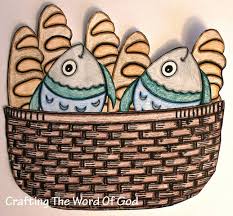
Image result for feeding 5000One Friday night a month, Pr Herrick would fire up the grill and the people of the Northside of Syracuse would enjoy some hot dogs together.  In all kinds of weather; the sweet glow of a Syracuse summer or the frigid cold of a Syracuse winter, folks had a place to go, share some conversation, some fellowship and some hot dogs.

Although this is a very different picture than the huge crowd who gathered on the green grass of some hillside, it was still a statement of solidarity with neighbors.  That sweet smell of charcoal fire formed community where relationships could develop.  This was no fancy talk about community, it was the act of being community around some hot dogs and condiments.  The People of First English Lutheran made community once a month on the corner of James and Townsend and the people of the northside had one less meal to worry about.

It was an example of ordinary food becoming God’s grace, meeting the universal need to be known, to belong, to have value and certainly not least of all, to be fed.  There on the corner of James and Townsend unfolded one scene in God’s great drama of grace for the world.

Yet, just like our story today in the gospel of John – just like any meeting at any of our congregations, the people of First English had their own disciples named Philip and Andrew.  Philip who always asks “Do you know how much this will cost?” and Andrew who insists we have too little.
 
Hot Dogs in the Kingdom cost about $50 a month, and Pr. Craig would gently encourage disciples from more affluent lives to offer up their 5 loaves and 2 fish, like the young boy in the story.  In the end, there was too little for First English to continue, but at the same time, to the end, hot dogs were served once a month at the corner of James and Townsend.

We are familiar with the story of a miraculous feeding of 5000.  Every gospel has a version and, in each one, Jesus not only feeds the thousands in front of him, he instructs his disciples to gather up the leftovers.  Gather them up so nothing goes to waste. 

Gather them up because even if there are 5000 people reclining on the grass and being fed until they are full - there are others who aren’t here: outsiders: who need to be fed as well.  There is a larger community to be formed.  There is to be No wasted bread; no wasted people.  This is God’s mission in Jesus and God’s mission for God’s church.

And yet, that’s not how we count our ministry successful. In our minds, to be successful we need our own pastor, a beautiful sanctuary, pews and programs filled with people.    It is success by the numbers: easily reported, easily graphed, satisfying to hear. And when the numbers begin to soften, the pews are emptier year by year, our own Philip and Andrew pipe up with “How much will this cost?” and “We have too little”

Jesus, however, is looking to the horizon, looking for the hungry and lost ones, for the outsiders, the strangers. For Jesus there is to be no waste: neither bread nor people shall be lost.

Throughout Gods story, people are being fed.  Who doesn’t connect Moses in the wilderness with the manna from heaven? But we need to look beyond Moses feeding just the children of Israel, or Elijah feeding just the widow of Zarapheth and her family and see Jesus, the Christ who searches for those who need to belong, to be known, to be valued, and not least of all, to be fed.

This is where we come in.  It is our mission: to gather up the leftovers and go into the streets and seek the ones who never heard about Jesus’ miraculous feeding of the nations. To make a new community; develop  relationships centered on the life-giving good news of Jesus.

In the weeks ahead you will hear the call to take up your cross, about being a servant and putting aside riches in order to follow Jesus.  These powerful passages will call you to confession as you evaluate your own discipleship.

But I think none has the capacity to move you to confession more than our story today because this scene of a community gathered around a meal lies right within your grasp.
 
The truth is that too often we say How much? And claim that we have Too Little and our central concern is the future of what we have and not the hunger of our neighbors.  Then, like the Israelites in the desert, we pressure our leaders to make it all right, to bring us manna from heaven. We turn the story on its head, wanting for ourselves and paying no attention to the outsiders.

Today we are being asked some fundamental questions. 

Who is this Jesus whom you confess, to whom you have given your life? What do you expect from this Jesus who feeds thousands and hangs on a cross dying?

Do you truly believe that in Jesus we experience the fullness of life that we call eternal?  Do you believe that God’s bounty is intended to be blessing to all of creation?

Isn’t it time to stop asking How much and claiming that we have Too Little?

And time instead to ask Who is hungry?  Who is lost?

Lord, bless the work that we do in your name for the sake of your people.  AMEN


Wednesday, July 25, 2018

Caution: disciples at work

Every three years those of us who follow the Revised Common Lectionary will listen again to an unremarkable passage from the gospel of Mark, chapter 6.  It begins with tired and hungry disciples, completely skips over the miraculous feeding of the 5000 and Jesus walking on water, and concludes with Jesus healing all the people swarming around him.

I call it unremarkable because we usually get a good miracle, a pithy teaching, even an obscure exorcism.  With this selection of scripture we get ordinary, plain vanilla healing.  Ho hum.

But of course to those folks who live on the fringe of society, touching the fringe of Jesus' garment and experiencing the healing power of the Lord of Life was anything but Ho Hum.  It was a once-in-a-lifetime experience.  It was their own particular miracle, their own particular encounter with the power of the Living God. All it took was Jesus delaying his time away; pausing to teach and to walk among them, allowing them to reach out and experience the powerful presence of God in their midst.
Image result for people walking together
I wonder, however, where we are in this story?  What is God's message to us in this peculiar cut and paste of Mark's gospel?  What are we supposed to do with this?

Here is one possibility.  When I was learning how to bake bread from my mother, we got to the part called 'kneeding the dough'.  It's an important step and it takes practice. My mother tipped the dough onto the generously floured surface, sprinkled flour over the top of the dough and said, "You do it like this."  After a couple turns of the dough, she put her hands on mine and we pushed and pulled and turned together until I got a rhythm.  Then I was on my own.

Later in the story Jesus will tell his disciples to care for his sheep.  Today he gave them a lesson on what that looks like.  As he walked among the needy and desperate you can almost hear him say, "You do it like this."

As followers of Jesus, we walk among our neighbors and bring with us the powerful presence of our Lord. Right?

Tuesday, July 24, 2018

The hard work of compassion

"As Jesus went ashore he saw a great crowd and he had compassion on them because they were like sheep without a shepherd" Mark 6.34

Image result for shepherd surrounded by sheep
No matter where Jesus went, there they were.  People flocked to him, pressing upon him and trying to get just a touch, just a word, maybe a crust of bread, maybe a miracle.  It was enough to wear a person out.

Yet, Jesus saw the great crowd and had compassion for them, and in spite of his hunger and fatigue, he began to teach, to touch, to heal.  You can picture Jesus walking among the demanding crowds, like a shepherd walking in the midst of his milling flock of sheep: the sheep crying out in their confusion turning this way and that, packed together for a sense of security.  There is Jesus in the midst of them, within an arm's reach, working the crowd for the sake of the Divine Creator.

Compassion requires up close and personal commitment.  The word itself means 'to suffer with' and 'suffering with' cannot be done from afar.  Compassion doesn't ignore or circumvent or even turn a blind eye to the suffering before them.  Compassion walks into the crowd, staying within arms' length, hearing and smelling the needs of others.

God's great act of compassion was to be present among us in Jesus.  Thus is the power of the incarnation = God taking on human flesh.  In Jesus, God walked among us, within arms' reach, up close and personal.  This was no virtual reality; Jesus was no hologram.  As we suffered so suffered Jesus; as we die, so Jesus died.  Compassion - to suffer with another.

Mark records no special miracle performed that day, but of course, having the Savior of the Cosmos within arms' length comes amazingly close.


Living on the fringe


They stand on the edge, looking over the heads of others, seeing their goal in the distance. 

They are not the majority, although they are often silent.  Pressed to the outside, on the fringe of the norm, their job pays not quite enough, their skin is too brown, their accent is off-putting, their body is misshapen.  They are the trailers on the classic bell curve, and they have little hope of ever making it to the top of the hill, to stand among the accepted and acceptable, those who don’t have to worry about living on the fringe. 

Image result for touching jesusSome are anonymous – the older couple who don’t qualify for Social Security, whose health is sinking and whose mortgage has another 5 years.  The teen whose sexual reality doesn’t conform.  The father of 3 who never eats lunch otherwise his children won’t eat supper.  Some are instantly recognizable.  They wander the streets, they know the locale of every free meal in the city, they live on that street where fleas and cockroaches and violence are common.  

But they are all living on the fringe.  They live in a world of hurt where dreams have a very short shelf life and hope is a rare commodity.  They trust the promises being made by charlatan and politician and that charismatic preacher on the street.  They trust because in the end, something is better than nothing….…which is probably why those people mobbed Jesus wherever he went.  What is a 5 mile walk when, at the other end you just might be healed, you just might be fed, you just might find a bit of respite?

All they needed was to touch the fringe of his garment; whatever his power, whatever its source it could come to them through the fringe of his prayer shawl.  Maybe, just this one time, someone on the fringe could be healed by the fringe of this unknown teacher.

Just maybe.  It was worth a try.  Reaching, stretching, hoping, needing.  

What about you?  Bring back any memories?

Mark 6.30-34, 53-56


Tuesday, July 17, 2018

Good dance, bad dance

David danced before the Lord in the procession of the Ark of the Covenant.  It was free, and joyful and certainly not kingly.  But it was worship because above all else, it honored God.

Image result for salome dancingHerodias danced before Herod and a crowd of (probably) inebriated cronies (read that as: drunk, powerful men).  From Herod's reaction, it was beautiful, seductive and in the end, deadly.  As a reward for her performance, Herodias received John the Baptist's head on a platter.  It was gruesome, it was egotistical and prideful and it honored no one.

Good dance, bad dance.

What kind of dance are you dancing?  One that honors God or one that honors the powerful?  Good dance or bad dance?

Be assured I ask this question from the perspective of an awkward and occasionally rhythmically challenged dancer.  But of course, how we look on the dance floor at a wedding is not the point at all.

The point is:  how do you look on the dance floor of life?  Are you dancing a life that honors God?  Do you work at love, compassion, generosity, forgiveness, humility?  

Or are you dancing the dance of the powerful?  Are your choices grounded in self-preservation, protecting what's yours, keeping the needy at bay, giving no thought to the oppressed?

Who is playing the flute for you?  Who is calling the shots?  Who commands your respect?  For whom will you sacrifice?

To whom do you give glory?


Many thanks to Fr. Peter Williams, Grace and Holy Spirit Church, Cortland, NY for this dancing perspective on the lessons for Sunday, July 15th.  This is his sermon in a capsule although it doesn't include an awesome rendition of the Chicken Dance from the congregation.   https://www.youtube.com/watch?v=l5sIspLfmXM  for a good version.

Dancing in church

When was the last time you danced in church?  Well, to be more specific, in a worship service?  I have been known to pick up the beat just a little when we are singing one of our wonderful hymns with Caribbean rhythms, but dance?  Not since a complete stranger told me I danced like a Lutheran.  Can still hear his voice!

Image result for twirling childIn spite of the pietistic history around dancing (my great-grandmother forbade dancing on the Sabbath, as have many Christian denominations), our sisters and brothers in Africa can't imagine a worship service without some form of dancing.  Their 'offering processional' is often a dancing line of folks moving towards the altar to bring their offerings forward.  The choirs rarely keep their feet still, which is a pattern we witness in many of our African descent congregations.

Annnnnd, it is biblical!  This past week we watched as David 'danced before the Lord' in the great procession moving the Ark of the Covenant from its temporary home to it new tent home.  (It would be King Solomon who finally built the Temple, a permanent home for the Ark).  I assume David was simply moved by the occasion, the wonder of the Ark's presence, or maybe even the Holy Spirit when he led the people in this great procession.  He had stripped off his princely garments, and clothed in just a linen ephod, he danced.

Of course, as happy as this occasion was, and as joyfully as David danced, there were critics.  His wife, seeing David from a window, 'despised him.'  Doesn't say exactly why.  Perhaps because he was next to naked.  Perhaps because he was not acting like a king.  Perhaps because David felt the total freedom to express himself freely.

Or perhaps because it just wasn't proper.  There are so many things we don't do - so many ways we restrict our expressions of worship before God - because they are not 'proper'.  Yet, I think that anytime we recognize the wonder of God's exquisite creation, the expression of talent and grace in word or movement or song, even each time a child's laughter rings out clear and pure, we are called to give thanks .........which is the purest form of worship. 

I remember the two year old who thought her part in the children's message time was to step up to the altar and twirl and twirl until she collapsed in joyful laughter. 

Like David, she was dancing before the Lord and it was pure worship.

Wednesday, July 11, 2018

Feasting on power

In the end, Mark's story is about Jesus.  A good author could probably explain the reason this story about John the Baptist is so effective in unveiling Jesus' real identity, however it is good to remember that in the end, this is a story about Jesus.

And power.

Even with all his great power, Herod couldn’t silence the preacher named John who was not afraid to speak out against wrong. Herod knew that John was right, and he feared him as a holy and righteous man, but John was a problem.  First, Herod had him imprisoned.  Next, Herod served John up on a platter. In the end, Herod's own (infrequently used) conscience told him he was wrong, on all counts.  Herod's feast led to him feasting on his own evil and ego.

That is how power deals with uncomfortable or inconvenient truth.  It squashes the opposition, jails the journalists, martyrs the activists, and insists on its own (alternate) reality.  Or it grounds the teenager, turns a deaf ear to the spouse, fires the employee, labels the woman, shoots the black man.

Meanwhile, Jesus was feeding people on bread and the Word of God.  There was no power to equal the power of Jesus, the man teaching and healing in the streets and breaking bread on the hillside.  In a short time, Jesus would be on the top of another hillside feeding the world on his own body and blood.

Image result for 12 baskets left overHerod was feasting on power.  Herod would never be satisfied.  

Jesus feasted on love and had twelve baskets of leftovers.   That's who Jesus is.

Mark 6.14-29

Tuesday, July 10, 2018

Fear and Power

Fear and Power.

The story told in the 6th chapter of Mark begins with the dilemma of who Jesus really and truly was. People just didn't know what to do with all the stories they had heard, and possibly even the healings and miraculous feedings they had observed. Who is this man of Nazareth called Jesus?    'Some say Elijah or one of the prophets of old,' we are told.  

But Herod was sure it was John the Baptist, raised from the dead.  And Herod was afraid.  The big guy was afraid.  So much power, so much fear.

Image result for john the baptist head on a silver platterYou see, for a man with so much power, Herod spent a great deal of energy being afraid.  He was afraid that one of his sons would gain too much power and overthrow him (so he had them killed).  He was afraid that Rome would throw him out of office.  He was afraid that John the Baptist was preaching the truth about his marriage/morality and folks would listen to him, a rebellion would break out and undermine his power. He was afraid that John the Baptist was, in fact, a prophet (for Herod recognized him as a holy and righteous man) and there might be cosmic consequences for his actions. I believe in some corner of Herod's heart (a corner he apparently assiduously ignored) Herod was afraid of God.

It all started at a lavish banquet complete with a dancing girl where Herod was afraid of looking weak in front of his rich acquaintances at his birthday feast. I imagine a large quantity of alcohol in an atmosphere of seduction led to his foolish promise, but now, Herod is haunted by that night.  'I will give you whatever you ask even to half of my kingdom" he promised.  She wanted John's head.  On a platter.

This is a young girl who will soon be married off to whomever pleases her parents.  In most situations, she is counted among the powerless.  But not that night.  That night she had Herod right where she (or probably more accurately, her mother) wanted him.  She was powerful because Herod was afraid.

Fear and Power.  Power and fear.  Did I mention they go together like hand in glove?


Mark 6.14-29