Tuesday, December 3, 2019

the long darkness.....


Image result for solitary candle

That point where the light one has always known 
and the skills one has spent a lifetime perfecting 
and the faith whose previous challenges had been but whispers of the unseen future is where hope is found. 

In that place, no logic prevails; no meaning echoes from the depths. You stand deep in a tunnel of darkness without plans or schemes or even wild magical thinking; only your breath remains. 

 Quietly in, quietly out.


Hope is tucked in the secret chambers of our hearts, overlaid with fear or sorrow, buffeted by longing and loss. It is the flicker of ‘maybe’ the faint glow of ‘perhaps’. Under all the knowing we have gathered through the years, a child’s voice forms the words, ‘Please don’t forget me’. Faint promises of love are all that is left. 

 except for the waiting.


In the long darkness, hope stands solitary guard. Fragile. Precious. In the dark, hope carries us just as much as we cling to hope in order to move forward. 

So we remember the others.  Jesus’ mother ponders in her heart. Martha’s sister kneels, pouring out her love in fragrant anointing. Four men carry their paralyzed friend through a roof to get to the feet of Jesus. A dying thief seeks whatever Jesus can bring.

Hope. Trust. Faith.
We wait and we watch......in hope.

A blessed Advent to all.

Monday, November 11, 2019

When there was nothing but God

Wilderness is a potent symbol in the telling of God's story.

Image result for barren wildernessIn the beginning, when God began creating, there was nothing; thus the primal wilderness.  In this space, God was - moving with power, calling into being, distinguishing and separating - a pure experience of divine power, imagination, and creativity.  It set the stage for what wilderness could be, a time and place where the Divine Creator was at work, shaping new paths, bringing light to new visions.

When the people of Israel landed in the Sinai wilderness, it would have been helpful if they had remembered this.  But it is hard.  It is hard to lean into the future when the world you have known disappears.  It is hard to trust that something life-giving will be revealed when your heart is weighted down with grief over what has been lost.  It is hard to put one foot in front of the other when there is no destination in sight and worry fills the wee hours of the morning. Faithfulness to God's calling and trusting in God's powerful presence frequently looks like foolishness and folly.

In those spaces, at those times, we need the God who brings life out of nothing more than some star dust and love.  Thank God that is exactly the God who has come to us and claimed us as 'beloved children' both in the garden and in the wilderness, in life and in death.


Monday, November 4, 2019

The persistent widow and the unjust judge.

Image result for persistent widowIt is, as if, Jesus had called Central Casting and requested two stock characters for his little documentary.  First he needed the most vulnerable, historically ignored and abused individual they could imagine.  Enter: the persistent widow.  Second, he needed the most privileged and arrogant male in a position of power: the unjust judge. He uses these two characters to remind us that our journey along 'the Way' (following Jesus) would take us through some serious spiritual swamps.  What is required of us on this mucky muddy road?

Micah tells us that three things are required, 'Do justice. Love mercy, and walk humbly with your God.'  The parable about the unjust judge leads us to consider the command to 'do justice.'


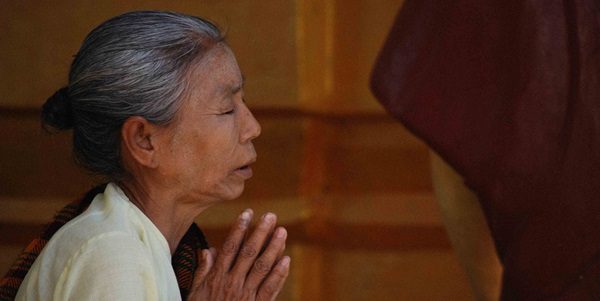
woman in prayerFor many, justice equates with an episode from Law and Order.  However, the biblical concept of justice is much larger than a criminal court system.  In God's schema, justice involves the whole of the universe.  Justice reigns when the system is balanced; equal access to all; equal voice.  Since we all know the world isn't balanced, then God calls those who have more to right the scales by caring for those who have been short changed.  In our parable, the widow is powerless, and easily dismissed - as the judge has done many times.

This arrogant judge, who admits he dismisses both fellow humans and God, sits in a position of privilege.  He might even have worked hard for it, but he uses that privilege solely to serve his own desires and purposes.  You can picture him down at the country club bar with some cronies laughing at this hapless woman who Won't.Go.Away!  It doesn't matter how just her cause or the depth of her need.  He just wants her gone.

Systemic injustice was not just a problem in 1st century Palestine.  Let me cite some examples from today.  A school system has announced that children who owe lunch money will not be given food; they will be turned away at the lunch line.  Or this: The pressure of competition from the big box stores keeps the price of a gallon of milk artificially low in NY, at least $10 per hundred weight under the cost of producing the milk at the farm.  Smaller farms will be forced out of business.  Or this: The incarceration rate of persons of color twice exceeds their percentage in the population; they are given longer sentences for similar crimes, and even at the cash bail level, are forced to pay larger amounts.

Let's hear this parable as a reminder that injustice is alive and well and right down the street.  We move through ethical swamps daily and interact with systems that privilege some and shortchange others.  Somewhere in your life, you have or will run up against a system that is, in its design, unbalanced.  Often we sit in the position of privilege.  We have options and advantages that are not given to others.  Justice is skewed.

Our call to discipleship includes actively seeking justice - not just for ourselves, but for our neighbor as well.  Of the many things that we could do, being the one who stands with the widow her next time in court is but one.  Skimming through life pretending that it all evens out in the end is to ignore our call as disciples.

I rarely know how to address the injustice I see or know exists, but I am certain that turning a blind eye and deaf ear to the cries of the widow is not the option Jesus calls me to.

Monday, October 21, 2019

Keeping score; making confession

“Grace cannot prevail,” writes Robert Farrar Capon, “until our lifelong certainty that someone is keeping score has run out of steam and collapsed.”*

Image result for golfIn spite of the fact that I am a terrible golfer, golf has provided me with a grand metaphor for the concept of original sin:  keeping score. [Just an aside. I don't conceive of an original sin which has infected all human beings always, but rather, an action or attitude that continually breaks our relationships with one another and with God.]

So.....in golf, you are either at par (average), above par (which appears to be a little better, but is, in fact, worse) or below par (which appears to be worse, but is in fact better).  By the end of 18 holes, the winner has the lowest score, but can easily be 'above par' and so not really that good.  Likewise, a loser could end up below par, but not far enough.  It's an Alice in Wonderland sport.

Keeping score is what we do. We claim our  better jobs, better schools, better grades, better sports teams are the easy examples.  Our Instagram pictures prove we take better vacations, go to better concerts, have better friends.  Our family reunions are a cacophony of often not so subtle one upmanship.  Somehow we have convinced ourselves that we are in a lifelong race with every other human being near us, and so we keep score.

Because we are so busy keeping score, watching one another, greedy for advantage, envious of another's good fortune, lusting after power, we can't imagine that God - or however you image the Divine Creator - isn't keeping score as well.  God is just waiting to 'catch' us in some indiscretion or outright nastiness, recording this failure for all eternity, and often planning some kind of punishment for our failure.  No wonder no one wants to talk about God or sin.  The result is that the concept of grace is more dense than nuclear physics.

Grace is both the gift given and the manner in which it is given.  Grace is forgiveness without requiring a pound of flesh or deep groveling.  Grace is making whole what was broken without constant referral to the repaired cracks.  Grace is love.  Love is Grace.  In the end, there is no greater gift. It is a gift we are loathe to accept because first, it speaks the truth and therefore, we want to earn it.  Of course if you have 'earned' it, it isn't grace.

Image result for forgivenessBut in our heart of hearts we know that there are a slew of things that someone should be keeping track of - things we have done, or not done, for which we are to blame, which have caused harm to others.  You make up your list; I have my own. So, we are suspicious of such a gift because we know our own flawed history. We also know how hard it would be for us to be truly gracious.

Enter the gift of confession.  Yes, I said 'gift'.  The act of confession allows us to stop running (away from ourselves and away from others) and speak truth - about who we are and what we are capable of doing.  It is a moment when all the posturing comes to an end and we admit - mostly to ourselves since everyone else has known all along - that we were out of bounds, missed the target, broken the rules, hurt someone else.  We say it aloud (even if only in our heads) to make it real. No getting around it.

Then grace happens. Like a warm blanket on those nights when the temperature plummets.  Like a cup of tea with a friend.  Like the gentle touch of a loved one who has been wronged.  Words of forgiveness that allow us to breathe deeply once again.  An outstretched hand that invites us back into relationship.  A voice that calls us 'beloved'.

Certainly consequences will be paid; amends will have to be made.  We will need to do work to strengthen the relationship that somehow we broke.  But we can stop running and begin living. We can be a part of someone else's better tomorrow.

Now that's amazing!  That's grace.


*Robert Farrar Capon, Between Noon and Three: Romance, Law, and the Outrage of Grace (Grand Rapids: Eerdmans, 1997), 7.

Evans, Rachel Held. Searching for Sunday (p. 265). Thomas Nelson. Kindle Edition.

Monday, October 14, 2019

An original sin........

Image result for adam and eve apple
For most of us, sin isn't particularly original.  Nor can most of us remember what our original sin was.  However,  I want to talk about the original sin.  You know, Adam and Eve and the apple (which wasn't necessarily an apple, just a piece of fruit, but why argue with all those Renaissance paintings?).

Or maybe you don't know.  Maybe you are one of those folks for whom religious symbols or biblical terms are so archaic as to be incomprehensible.  Fair enough.  No point in discussing original sin if you don't know the first thing about it.

A quick synopsis.  Before things went haywire, before people were casually unkind and intentionally evil.......when everything was well, and good, and beautiful and life-giving.......there was no sin.  We are fairly sure that there must have been a time when things weren't as bad as they are today. (Although I do not mean 'the good old days' which may be fondly remembered by the geriatric crowd but which, in fact, were just as broken and dangerous as today but with uglier fashions)

Furthermore, when I use the highly charged religious term 'sin' I want you to think 'broken' 'forsaken' 'warped' 'skewed'.  Let's use the word 'sin' to talk about the distortion of our shared life that causes pain and sorrow - too often deliberately, but often unintentionally or unavoidably.

People of every nation and culture have pondered about the possibility of a paradise - a time and place where everyone simply got along with everyone else, kindness and compassion prevailed, life was truly good.  The great storytellers of each of these cultures have woven tales of what it was like  when it was wonderful; Christians (and others) call this paradise Eden and it was a garden where animals cooperated, the vegetation was lush and suitable for eating, and the people were so sympatico that it was as if they came from one whole cloth.

But since we know that the world we inherited is not any version of paradise, how did we get from those wonderful imaginings to the mess we have today?  Somehow, it all broke and became so shattered that all the kings horses and all the kings men couldn't put it back together again.  What started this cascade of disaster?

Well, there are lots of stories about that as well.  For Christians, this is where Adam and Eve come into play.  They are the original human creatures, and on one hot afternoon (I made that up) when they were walking through the magnificent garden God had created and given to them as home, they encountered a tree called 'The Tree of the Knowledge of Good and Evil".  (Remember, this is a story, not a travel guide).  It seemed like a good thing to be able to know good from evil, and the fruit of the tree was very appealing.  So they ate.

Here's the rub.  God had given them only one thing to remember in their garden, and you can guess what it was:  stay away from the tree of the knowledge of good and evil.  One thing!  They took the first bite of that 'apple' and the rest is human history. God called out Adam, Adam threw Eve under the bus, and Eve blamed the wily serpent.  With finger pointing all around, Paradise ended.  Adam and Eve were evicted, they began to know the pain that comes from power-over relationships and the act of creation.  They lost their close connection with the Creator, and work became a four letter word. The essential relationship between Creator and Beloved Creature is forever broken.  We know it as sin.

From a single act comes generations of broken relationships.  It is a pestilence upon the human race perpetrated by the human race.  It is from these dreams of paradise, and stories about a desire that led folks astray, to the reality of our broken world that we get the idea (and, in the Church, doctrine) of  'original sin.'

So to bring us full circle, once again I assert, few of us are original in our sin, nor can we point to our very first 'original sin.'  We ask  Who is to blame?  Is there a way to fix it?  How did sex get involved?  Keep an eye out for more sin talk.

Tuesday, October 8, 2019

Please, not the wilderness!

Image result for desert wildernessWhatever counts as wilderness in your life, I'd bet you would prefer to avoid it.  It might be that time between test and diagnosis or those months after a romantic break-up.  It might be those long, painful days into weeks (please God not too many months) between jobs.  It can even be that horrid time when a loved one is lost, a lifetime of work is destroyed, or a dream is shattered.

The wilderness is that place where the wild things are - beyond civilization, beyond the familiar, outside the norms. Animals with names like uncertainty, fear, anxiety, insomnia....and the worst of emotions, insecurity roam free and flourish.  It is the place where whatever you considered absolutely essential (the very word means 'necessary for life') which might have been as mundane as a short line at the coffee shop, has now morphed into the most basic of human needs:  a kind word, a place to sit, a little comfort food.

And that's just the first stage of wilderness living.

In the wilderness, we are naked.  All of our status is stripped away.  Perhaps that is the first pain.  We no longer have a title, like 'teacher' or 'barista' or 'husband' or 'healthy.'  We no longer have an answer to that friendly question, "What do you do?"   or maybe "How's it going?" Routine is gone; expectations shift.

But, of course, it goes deeper.  We are unnerved by whatever has thrown us into this barren place without road markers, without GPS.  Who am I?  How did I get here?  Where am I going?  How will I make it?  Looking back on it, our teen years were probably the first time we were conscious of this unsettling wilderness space.  In a space without boundary lines to mark our edges, we fear flying off the face of the earth.  We think we will disintegrate; we will lose ourselves.

Oh Lord, how we hate the wilderness.  Please don't send us there.

It's a cry that our Lord might not truly understand, for if we spend some time in the God story we call the Bible, the wilderness is where God does some of her best work.  Sinai?  Elijah escaping Jezebel?  Jesus in the Judean desert?  Jonah? 

See you tomorrow.

Tuesday, October 1, 2019

please take away the pain

Image result for man weepingAs Brené Brown puts it in her video "Jesus Wept"

“I went to church thinking it would be like an epidural, that it would take the pain away . . . But church isn’t like an epidural; it’s like a midwife . . . I thought faith would say, ‘I’ll take away the pain and discomfort, but what it ended up saying was, ‘I’ll sit with you in it.’ ”*

Everyone has suffering in their life.  If you haven't by now, just wait because someone you love will die, someone you know will be caught by a deadly disease, someone you know will have their job disappear or their marriage dissolve.  To be human is to suffer because our bodies are time stamped and our psyches are fragile and our will power is often used to consolidate our advantages rather than choose for the greater good.

So I believe that the question of higher powers and divine intent and human culpability and just plain luck are always lurking on the corners of our attention.  Is someone to blame?  Could it have been avoided?  Could someone have stopped it?  We relentlessly ask the question, "Why?" which will often turn us to the question of "Who?"  For people of faith, the answer is God (whom we call by different names).

In the 11th chapter of the gospel of John, a friend of Jesus' named Lazarus dies.  He was 'sick unto death' and Jesus tarried a bit too long on the road and in the end, Lazarus was dead.  Wrapped in a shroud dead.  Four days dead.  Dead.

And his sisters, also good friends of Jesus, each in turn cried out, "Lord, if you had been here my brother would not have died."  It is the cry of the recently bereaved.  Then Jesus asks to be taken to the cave like tomb where Lazarus had been laid to rest.

And at the tomb he wept.  He wept even though he had known Lazarus was already dead.  He wept knowing that he would call Lazarus back into life in just a few moments.  He wept knowing that the Divine Father offered Lazarus a place at an eternal table that exceeded all expectations.   Even though he knew the end of the story, he wept. He wept because he loved and he could not ignore the pain that surrounded him.

There are many powerful stories told in the scriptures, and they speak to me at different times in my life.  But for me, there is no more stark image of incarnation than Jesus standing before a tomb that he would soon empty, weeping.  From this I know that Jesus weeps with me, and my friends whose lovely daughter took away her own life, and the anonymous mothers whose children were caught in a war zone, and the myriad of others who this day will confront a tomb and weep.

It is the sound of love.  God for us in Jesus.  Us for our beloved.  It is the sound of all humanity.

*“Brene Brown: Jesus Wept,” video, 6:00, The Work of the People, www.theworkofthepeople.com/jesus-wept (accessed 13 October 2014). as quoted in Evans, Rachel Held. Searching for Sunday (p. 209). Thomas Nelson. Kindle Edition.