
It is, as if, Jesus had called Central Casting and requested two stock characters for his little documentary. First he needed the most vulnerable, historically ignored and abused individual they could imagine. Enter: the persistent widow. Second, he needed the most privileged and arrogant male in a position of power: the unjust judge. He uses these two characters to remind us that our journey along 'the Way' (following Jesus) would take us through some serious spiritual swamps. What is required of us on this mucky muddy road?
Micah tells us that three things are required, 'Do justice. Love mercy, and walk humbly with your God.' The parable about the unjust judge leads us to consider the command to 'do justice.'
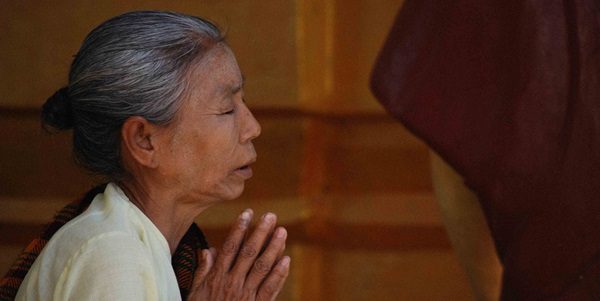
For many, justice equates with an episode from Law and Order. However, the biblical concept of justice is much larger than a criminal court system. In God's schema, justice involves the whole of the universe. Justice reigns when the system is balanced; equal access to all; equal voice. Since we all know the world isn't balanced, then God calls those who have more to right the scales by caring for those who have been short changed. In our parable, the widow is powerless, and easily dismissed - as the judge has done many times.
This arrogant judge, who admits he dismisses both fellow humans and God, sits in a position of privilege. He might even have worked hard for it, but he uses that privilege solely to serve his own desires and purposes. You can picture him down at the country club bar with some cronies laughing at this hapless woman who Won't.Go.Away! It doesn't matter how just her cause or the depth of her need. He just wants her gone.
Systemic injustice was not just a problem in 1st century Palestine. Let me cite some examples from today. A school system has announced that children who owe lunch money will not be given food; they will be turned away at the lunch line. Or this: The pressure of competition from the big box stores keeps the price of a gallon of milk artificially low in NY, at least $10 per hundred weight under the cost of producing the milk at the farm. Smaller farms will be forced out of business. Or this: The incarceration rate of persons of color twice exceeds their percentage in the population; they are given longer sentences for similar crimes, and even at the cash bail level, are forced to pay larger amounts.
Let's hear this parable as a reminder that injustice is alive and well and right down the street. We move through ethical swamps daily and interact with systems that privilege some and shortchange others. Somewhere in your life, you have or will run up against a system that is, in its design, unbalanced. Often we sit in the position of privilege. We have options and advantages that are not given to others. Justice is skewed.
Our call to discipleship includes actively seeking justice - not just for ourselves, but for our neighbor as well. Of the many things that we could do, being the one who stands with the widow her next time in court is but one. Skimming through life pretending that it all evens out in the end is to ignore our call as disciples.
I rarely know how to address the injustice I see or know exists, but I am certain that turning a blind eye and deaf ear to the cries of the widow is not the option Jesus calls me to.
 In the beginning, when God began creating, there was nothing; thus the primal wilderness. In this space, God was - moving with power, calling into being, distinguishing and separating - a pure experience of divine power, imagination, and creativity. It set the stage for what wilderness could be, a time and place where the Divine Creator was at work, shaping new paths, bringing light to new visions.
